Showing posts with label Author Feature. Show all posts

Monday, 27 March 2017

Author Feature: J.D. Smith

Once in a while, we like to remind ourselves of why we're an author collective. Five individuals in three countries bound by a love of writing. People often ask how it works, but rarely why.

Here's the latest - in fact the last! - in our Author Feature series, on why we appreciate JD Smith.


Catriona Troth:
While historical fiction often comes in hefty tomes, Jane’s novels are pared right down, homing in on the stories of one or two individuals and creating their worlds with a few deft touches of the pen. She uses simple, unfussy language that feels timeless. While the story of Zenobia, Warrior Queen is epic in its scope, Jane delivers it in serial form, each element a small gem.

JD Smith is not only a novelist, but also a highly sought after cover designer. She has created the whole Triskele ‘look,’ from the logo on, as well as designing covers that establish distinctive brands for each of us as authors. She has an instinct for understanding what it is an author wants, and then delivering it with panache.

And as if that wasn’t enough, she is also the founder of and the power house behind both the literary e-zine Words with Jam and the review site, Book Muse UK.


What readers say about Tristan and Iseult:

“This is one of the most intelligently written and beautiful books I have ever read. The theme is well known, as are the characters, but JD Smith narrates the story from both perspectives with a haunting quality. The descriptive text is first-class and the reader can feel the cold winds, the biting rain together with the contrasting landscapes of Wales and Cornwall. The love shared and lost is a strong emotion brought tenderly to life in brutal times, accurately described.”

"The legendary sad tale of Tristan and Iseult told with spare, crisp prose, keeping the story taut and short. Very evocative of the time period with no sentimentality brought from the present day. A haunting melancholy of unfulfilled longing peppers every page and the brutality of that age is shown with unsparing detail. The imagery is immediate and vivid of each location, whether salt laden coast or the wet greenery of Wales. A recommended read if you want to understand why this famous legend has stood the test of time."


Gillian Hamer:

Jane has an outstanding talent for her organisational approach to life, and when you know exactly how much she handles on a daily basis, you can understand why!

Her design work is professional and polished, and her eye for detail is pure magic. I don't think Triskele Books would have had the same success, certainly in terms of branding and reputation, without Jane's creativity. I can't think of a time any of us have ever disagreed with her input on the design front. And we have all been blessed with praise for our individual covers. Professionally, she has years of success ahead of her, and her reputation will continue to grow.

From a writing perspective, I think it's totally brilliant that Jane has the opportunity to write what she loves, and that passion shines through in her writing. In Zenobia, Queen of Palmyra, Jane has brought to life a character lost in the mists of history, and she manages to make all of the trials and hardships that come with writing historical fiction look effortless. I admire her enormously for taking on such a challenge and creating such a brilliant series of books. She also has an editorial eye that is another huge attribute within the Triskele team.

And let's not forget she created the e-zine Words with Jam from scratch and continues to manage that in between her other work.

Add to that three adorable children any parent would be proud of - and I often ask how on earth she manages to juggle it all - a talent in itself!


What readers say about The Rise of Zenobia:

"From the beginning I was drawn into an ancient world, a world of hostile environments where only the daring survive. And into this harsh and often brutal land, comes Zenobia, a warrior queen who dares to take on the might of the Roman Empire. Based in Palmyra, (modern day Syria) in the 3rd century and mixing scanty factual evidence alongside pure fiction, the story of a brave and bold warrior is told in easy to read segments and with a lightness of touch this story of intrigue and political skulduggery comes gloriously to life."

"There are some twists in the story, moments of great poignancy, of violence, of triumph and of loss. Based on actual history and added to and blended beautifully by the author, this is a gripping read. It's scale is epic. It leaves the reader satisfied, but also wanting more - more of Zenobia who's shaping up to be quite a warrior queen and more of all these wonderful vivid characters and places."


JJ Marsh:
The remarkable thing about Jane's Overlord series is how she can transport you right into the middle of a battle or draw you to the heart of political manoeuvering, complete with smells, textures, tastes and tensions. You feel you are there. Her writing is both beautiful and sensory, but nothing is sanitised for modern sensibilities. She excels in atmosphere, whether that is a Cornish beach or the Syrian city of Palmyra in the 3rd century. Some scenes from Tristan and Iseult have stayed with me for years. I secretly believe she would make an extraordinary screenwriter but Hollywood can't have her because she's ours.

Her talents extend beyond writing superb historical fiction. She is the design mind behind all Triskele's covers and in fact our whole image. She combines an awareness of the market with an intelligent visual eye, working in harmony with her clients to achieve their dream covers. Small wonder she is so successful.


What readers say about The Fate of an Emperor

"Sometimes the best story about a figure that looms large in history is told through the eyes of another; this is something that the late Mary Renault did to perfection in The Persian Boy, and J D Smith does it here. It really felt like it worked as a narrative choice, to tell the story of an extraordinary historical woman from the perspective of a man who was close to her. I found myself appreciating that angle on it."


What readers say about The Better of Two Men


"Make no mistake, this is mature and assured writing. In the space of the opening paragraph, JD Smith will transport you to Roman East in the third century where you will follow in the footsteps of Zabdas, whose duty it is to stand by the side of his half-sister, Zenobia."


"What J.D. Smith does with historical fiction is to take it one step further. She makes you feel – feel what it was like to exist in that place and time, feel what the people who lived then went through emotionally, mentally, and physically. She picks you up and plunks you right in the middle of it so that you get the real experience of the characters’ lives with her vivid descriptions and her ability to make you feel the emotions of the characters."


Liza Perrat:
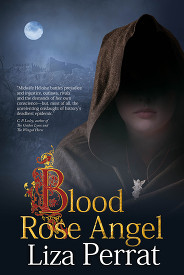
Jane’s professional skills as a talented designer are invaluable both for myself and for Triskele as a collective. Designing and setting up our website and blog, as well as the Bookmuse and Words with Jam sites, sending out regular newsletters and basically taking care of all our technical stuff is a real relief for someone like me who finds that side of things challenging. Jane is always there with a prompt answer or solution for my many silly “techy” questions too. I also appreciate her taking care of my own website design, as well knowing that, in her designs, I have the best book covers possible. One in particular comes to mind: Blood Rose Angel. For ages I tried to get that “B” right, searching for something medieval, striking and elegant. Eventually, the “B” that Jane painstakingly created was stunning, and exactly what I had in mind! I also value Jane’s critiquing skills. Succinct, and straight to the point in her own lyrical prose, she is quick to “red pen” any of my paragraphs that tend to lapse into purple prose.


Find Jane online:

WEBSITE http://www.jdsmith-design.com/

FACEBOOK: https://www.facebook.com/jdsmithauthor/ OR https://www.facebook.com/jdsmithdesign/

TWITTER: @JDSmith_Design


Friday, 27 January 2017

Triskele Author Feature - JJ Marsh


Once in a while, we like to remind ourselves of why we’re an author collective. Five individuals in three countries bound by a love of writing. People often ask how it works, but rarely why.

Here is the third in our Author Feature series, on why we appreciate JJ Marsh.

Jill grew up in Wales, Africa and the Middle East, where her curiosity for culture took root and triggered an urge to write. After graduating in English Literature and Theatre Studies, she worked as an actor, teacher, writer, director, editor, journalist and cultural trainer all over Europe. Now based in Switzerland, Jill works as a language trainer, forms part of the Nuance Words project, co-edits The Woolf and reviews books for Bookmuse. She is also a regular columnist for Words with JAM magazine, and an expert on writing book blurbs. She lives with her husband and three dogs, and in an attic overlooking a cemetery, she writes.

One of my all-time favourite series' character is Jill's DI Beatrice Stubbs. In a recent interview with author, Jane Davis, Jill spoke about the central character of her 6-part European crime novel series, DI Beatrice Stubbs.

JD: Your main character is Beatrice Stubbs. Can you tell us a little about her?

JJ: Metaphor-mixer, serial survivor, bipolar sufferer and lover of good food, she takes her job seriously and believes in justice. Problems arise when justice and the law diverge. Beatrice has been in my head for years, and I finally found the right vehicle for her. She feels like an old friend.

Watch this short interview to find out more about the captivating Beatrice Stubbs.


So, what makes JJ Marsh such a valued member of Triskele Books?

Liza Perrat: First and foremost, I value Jill’s organizational skills for the Triskele collective. So that we stay on track and have continuous interesting output, Jill maps out a weekly Workplan, which I believe we’d be lost without. Secondly, I am in awe of her ideas about how to promote ourselves and our collective, her dynamism and enthusiasm about instigating those ideas, as well as supporting our author friends, both indie and trad published. Thirdly, Jill’s critiquing skills are invaluable. Her no-nonsense, no-holding-back comments help to bring all the Triskele books up to the highest possible standard. I’d like to make a special nod to her blurb-writing skills too. I was floundering with the description for my latest novel and Jill came up with the most succinct, engaging and highly suitable blurb! And finally, Jill has written five out of six of the most brilliant and engaging European crime series. My personal favourite is number five: Human Rites, although the books can be read in any order. All of us are eagerly awaiting the release of number six this spring, while at the same time sad to say goodbye to Beatrice Stubbs.


JD Smith: Jill's talents for organising our tribe are always reflected in her writing, which is concise, well-researched and brilliantly executed. She is a talented and astute critic, and one of the most tactful I know. 

Catriona Troth: To get any disparate group of creative folks to work together, you need at least one person with a talent for herding cats. Someone who can focus on the long game, and also keep track of the steps needed to get there. In Triskele, that person is JJ Marsh. She is the one who pulls our madcap ideas together into a coherent plan. She cracks the whip, though always with a twist of humour. And she holds us all to a high standard in everything we do.

As a writer, she brings to each of her books the rich flavours of the many corners of Europe where she has lived. (Quite literally, as her detective, DI Beatrice Stubbs, is a lover of food and drink.) My favourite, Tread Softly, had me itching to jump on the next flight to Northern Spain, to walk (and eat) in Beatrice’s wake. Her plots are intelligent - a thinking reader's crime stories that don't rely on violence for cheap thrills.

As an editor, Jill is your greatest champion - and your harshest critic if she suspects you are selling yourself short. When I brought out my novel, Ghost Town, I was on the point of choosing a cover that was simply wrong for the book. Jill was the one who insisted I think again – and thank goodness she did!

Gillian Hamer: There are lots of magical facets to Ms Marsh that complete a sparkling diamond. From a writing perspective, she has the imagination, intelligence, experience, wit and warmth to ooze talent and create brilliant characters and page-turning stories.

From a Triskele colleague perspective, Jill has the most amazingly creative brain, she sees opportunities and makes them work, and she is totally committed and determined to succeed and help others succeed too.

Add to that her honesty, integrity and unflinching support - you can see why she is our driving force and why we couldn't survive without her.

What readers are saying about JJ Marsh’s Beatrice Stubbs European crime series:


Cold Pressed
Editor’s Choice – The Bookseller

“This is J J Marsh’s fourth, snappily written crime mystery featuring the feisty but vulnerable Stubbs, a most appealing character. It’s all highly diverting, and an ideal read for those who like their crime with a lighter, less gruesome touch.” Caroline Sanderson, The Bookseller


“Tread Softly oozes atmosphere and JJ Marsh captures the sights, sounds and richness of Spain in all its glory. I literally salivated as I read the descriptions of food and wine. JJ Marsh is an extremely talented author and this is a wonderful novel.” Sheila Bugler, author of Hunting Shadows

“There are moments of farce and irony, there are scenes of friendship, tenderness and total exasperation - and underlying it all a story of corruption, brutality, manipulation and oppression with all the elements you'd expect to find in a good thriller, including a truly chilling villain. Highly recommended.” Lorna Fergusson, FictionFire.


“I loved JJ Marsh's debut novel Behind Closed Doors, but her second, Raw Material, is even better. While Beatrice is fully occupied with the London crime, Matthew, and Beatrice's neighbour, Adrian, decide to investigate in Wales and what starts out as a light-hearted caper turns into something horribly grim. The truth is more terrible than Matthew, Adrian, or even Beatrice, could ever have imagined and the final chapters are heart-stoppingly moving and exciting.” Chris Curran, author of Amazon Bestseller, Mindsight.


 “Some rather realistic – if not particularly laudable – human exchanges reveal honest personal struggles concerning life’s bigger questions; the abstruse clues resonate with the covert detective in me; and the suspense is enough to cause me to miss my stop.” Vince Rockston, author.

“Beatrice Stubbs is a fascinating character, and a welcome addition to crime literature, in a literary and thought-provoking novel (Behind Closed Doors). I heartily recommend this as an exciting and intelligent read for fans of crime fiction.” Sarah Richardson, of Judging Covers.

“Behind Closed Doors crackles with human interest, intrigue and atmosphere. Beatrice and her team go all out to see justice is done. And author JJ Marsh does more than justice to the intelligent heroine who leads this exciting and absorbing chase.” Libris Reviews.

“Hooked from the start and couldn't put this down. Superb, accomplished and intelligent writing. Ingenious plotting paying as much attention to detail as the killer must. Beatrice and her team are well-drawn, all individuals, involving and credible.” Book Reviews Plus.

Connect with JJ Marsh online:  
Twitter 


Friday, 13 January 2017

Triskele Author Feature - Catriona Troth

Once in a while, we like to remind ourselves of why we're an author collective. Five individuals in three countries bound by a love of writing. People often ask how it works, but rarely why.

Here's the second in our Author Feature series, on why we appreciate Catriona Troth.


Author, editor and litfest organiser, Catriona excels as a connector of writers. She is the powerhouse behind our Indie Author Fairs and last year's Triskele LitFest. With her novella Gift of the Raven and her epic opus, Ghost Town, Catriona proves she can not only transport you to another time and place, but she makes you think.

What Amanda Hodgkinson says about Catriona

Catriona is the perfect kind of writer; the kind whose head is filled with vast libraries of stories, and for whom a deep love of words and form and a desire to communicate is a lifelong quest. The kind of writer who always has a great respect for her readers. That's just one of the reasons why her novels are so beautiful and absorbing. Catriona is the perfect kind of writer for other writers too, helping and supporting them, offering them her time, enthusiasm and her talents, all in the hope of bringing great books to new readers.


What makes Kat such a valued member of Triskele Books?

Liza Perrat: Catriona’s skill as a structural editor has been highly beneficial to the storylines of my own novels. Her drive for perfection, and her motivation to edit, edit and edit again, have brought her own books up to the highest narrative standard. And her skills as events’ organizer have been invaluable for all of our Triskele literary festivals. 

Jane Dixon Smith: Catriona's sympathies and understanding of the time and society in which her novel Ghost Town and novella Gift of the Raven are set is what gives them a special and honest feel, making them so compelling.

JJ Marsh: Triskele and the concept of an author collective arose from a conversation Kat and I had in 2009. Gilly, Liza and I made it a reality in 2011, and when Kat was ready to publish, it was only natural for her to join the team. She's an exceptional editor, a terrific networker whose aim is to help other writers, and most importantly, a brilliant writer. She tackles tough subjects in her work, remaining clear-eyed and unsentimental while delivering enormous emotional impact. Her books are impossible to forget.

Gillian Hamer: There's something about Kat in real life that comes across both in her writing as well as in her editorial work - and for me that is understanding. She has an eye for detail and a human empathy that are great talents to posses in both fields. I rely on her input in each of books, knowing she will see something others don't. And that's what makes her own writing so special too. She writes about things others do not see, it's a special talent in a writer and makes her style her own.


What They Say About Ghost Town

“There is a subtle blend of realism and pragmatism which allows the story to evolve in such a way that despite its subject matter, it never becomes distasteful or inflammatory. There is clever use of colourful street vocabulary which is dotted throughout the text; from South Asian Punjabi, through to Rasta slang, words which imply meaning without always needing to refer to the exemplary glossary. In Ghost Town, the whole vista of the 1980s is captured like a snapshot; a moment of time which embodies a culture one hopes is relegated to history books but which perhaps sadly lingers, alive in memory.” - Jaffa Reads Too

“The city comes alive almost as a character itself. Also the time - early 80s - is evoked so well it brought back vivid memories of songs, of movements, of clothes, of the political spectrum.
Ms Troth has a terrific ear for voices and accents; her characters come fully formed off the page by the sheer virtuosity of her ventriloquism.” - Barbara Scott-Emmett

“It's hard to liken GHOST TOWN to anything else out there, but there were certainly echoes of Alex Wheatle's EAST OF ACRE LANE. I would recommend this book to anyone looking to step out of their comfort zone and explore a little-talked-about pocket of British history.” - Polly Courtney

"Ghost Town is a fascinating exploration of the Coventry riots of 1981 and the events leading to them. Catriona Troth handles her material with a subtle touch and doesn’t flinch from showing the tensions and conflicts within communities and families as well as those outside. Ghost Town works as both a vivid record of a recent historical event and as a cracking good read." - Chris Curran

There’s a pleasurably subtle, gently restless, level-toned yet unsparing quality to many aspects of "Ghost Town", including these ones: the elusive nature of Maia, a reliable narratorial lens and yet a full individual with her own dramas too, whose open innocence manages to remain unsullied by seeing such ugliness and suffering around her; the novel’s smooth inclusion of quite a breadth of facts, terminology and historical detail (including several vivid trips out of Coventry, down to riot-torn Brixton); its successful ambitiousness in being at once a political story, a love story and a coming-of-age story." - Rohan Quine

"This book is challenging on several levels. Sometimes an uncomfortable read, it demonstrates the vital role of fiction in tackling serious issues, such as the threat that is perceived when the demographics of a city change rapidly, particularly at a time of high unemployment." - JE Davis

"Ms Troth has most admirably captured the atmosphere of urban decay, race riots, unemployment and the ever simmering violence of an era I well remember. The characters are well drawn and credible and the storyline most compelling." - Amazon reviewer


What They Say About Gift of the Raven

"The emotions entwined in this story are what really brings it to life. The author makes it very easy to see through the eyes of young Terry, and feel the pain and struggling he must endure. Mix this with the well-described Canadian cultures and history, and the novella becomes incredibly thought-provoking."

"I was enchanted by this novella about a boy searching for his roots and identity. The descriptions of landscapes are beautiful and the writing is lyrical and powerful. Reading this, I was reminded of Louise Erdrich's writing style and ability to create character and history within landscapes. An absolute pleasure to read. Moving and tender."

"A beautifully-written novella that explores the troubled childhood of Terry, and his journey to find his roots with the Haida Gwaii Indians of Canada. As well as Terry's heart-warming story, and the author's lyrical prose that brought these parts of Canada to life, I really enjoyed learning about a culture of which I previously knew nothing."

"This is a truly wonderful story and one which you won't forget in a hurry. It is skilfully written, the characters are full of depth and the scene beautifully set."

Here's Catriona talking about Triskele Books and how it works.


In addition to writing fiction, festival organisation, journalism and reviewing, Catriona is a well-respected editor.

Find out more or make contact here:
Website: www.catrionatroth.com

Twitter: @L1bCat


Friday, 28 October 2016

Triskele Author Feature - Liza Perrat

Once in a while, we like to remind ourselves of why we're an author collective. Five individuals in three countries bound by a love of writing. People often ask how it works, but rarely why.

Here's the first in our Author Feature series, on why we appreciate Liza Perrat.
Liza’s Bone Angel trilogy captures moments of upheaval in French history – the Revolution, the Nazi Occupation, the Black Death. But we view them through the lives of ordinary people – the people largely forgotten by the history books. - Catriona Troth


Jane Dixon Smith: As a huge fan of history, and a writer of historical fiction myself, I love getting lost in Liza's work. For me she invokes a real sense of era and I love how she's adapted to different centuries in her Bone Angel series, from a French village during the 1348 Black Plague, to the French Revolution and WW2 Nazi-occupied France. I found the descriptions and setting of Lucie-sur-Vionne particularly vivid and real; unsurprising as it is based on a real rural village, Oradour-sur-Glane. When you begin to flick back and forth between centuries, reading stories based in the same village, you suddenly realise just how much history these places have seen, and when you look at them through fresh eyes. They don't just hold a story they are most remembered for, but many other stories too. Liza's work really made me realise just how rich the past is. A great achievement.
What readers say about Spirit of Lost Angels:
“This was definitely a book that will leave you swirling with emotions ... I would definitely recommend the book as a suspenseful and historical tale of a women. Liza Perrat weaves a great story and if you are into historical fiction this a book just for you!”

“The character betrayals are very strong and realistic as are descriptions of the locations. A well-researched novel from this début author who writes in a way that will draw you in, especially if you are a fan of historical fiction.”

“The author has researched the period meticulously and effectively evokes the spirit of the age, whether she is writing about life in a French village or in the melting pot that was Paris in the revolutionary era. Liza Perrat is particularly strong when writing about the role and lot of women at the time. She also cleverly weaves well-known incidents, such as the diamond necklace affair or the storming of the Bastille, into Victoire’s story. This is a compelling and vivid story with strong characterisation, and I can recommend it highly to anyone who likes historical fiction.”

Gillian Hamer: Liza’s writing was one of the first historical fiction books that I remember reading in the online writing group where we met. I fell in love immediately with what was to become Spirit of Lost Angels, loving how she evoked the sense of time and place in her writing. Some aspects of the story echoed with what I was writing at the time, and I remember being so impressed by the ease she seemed to create her chosen world. She has a fluidity to her prose that is almost lyrical, especially in descriptions and sensory details. Her characters come to life, big and bold and ready to star in the production. I’ve learned a lot from reading Liza’s novels over the past decade about myself and my own writing – that in itself is an invaluable tool for a writer.

What readers say about Wolfsangel: “Liza Perrat's writing is full of passion and realism, the reader is drawn into the action and becomes part of the village from the opening chapters. The lead character; Celeste, has many difficult situations to deal with during the course of the story - her predicaments and her decisions are harrowing at times and leads the reader to consider how one decision can change the course of a life. Entwined into the story are true events, and it is this that adds authenticity and also the shock factor. The brutality of war, and of human behaviour is laid bare by the author who is not afraid to include the full horror of events that really happened.”


“Perrat draws the village characters deftly and highlights the high level of resourcefulness, inner strength, and sometimes lies, that were essential if you were to survive. It was a tension-loaded read. We know from education and reading other work that it was dangerous, often fatal, speaking and acting against the occupying forces; you had to be exceptional to attempt these. We have read stories of deportation and execution, so we know the worst that could have happen. Yet I was still on the edge of my seat reading Wolfsangel.”

JJ Marsh: It's no surprise we work so well as a team. We liked each other's writing long before we ever met. Liza's sensuous use of language has taught me a lot, and her emotional engagement with our work makes us focus on our strengths. If we under-use our talents, she gives us a swift kick. Her attention to detail shines in her own writing and she insists we do the same. I can point to lines, images, characters and scenes in my own books which owe their origin to Ms Perrat.

What readers say about Blood Rose Angel: “I can't begin to describe how much I enjoyed reading this novel. It caught my attention from the very first page and held me in its grip until the fabulous ending … If you like tales with strong, determined, and moral women at the helm, then this tale is sure to please. There is never a dull moment as the story unfolds and I can honestly say that it is unputdownable. This is a must read for those who love medieval historical fiction. You won't be disappointed.”

“What I like about this author’s writing style is the way in which she allows both characterisation and plot to have equal importance, with neither one attempting to outshine the other. The medieval setting comes gloriously alive, with all the sights, sounds and smells of the medieval world, and yes, also the petty indifferences, which are so reminiscent of this dangerous time. However, Blood Rose Angel is also inhabited by vibrant and memorable characters who take command of their story and as they leap fully formed onto the page, we are allowed a tantalising glimpse into the intricacies and sadness of their daily lives.”

“It’s beautifully written and the dialogue is a joy too, which is rare in historical fiction. But it’s definitely not all sunshine and the sweet scent of lavender and beeswax. It’s set during the Black Death and the medical passages are spot on (couldn’t resist the pun) as are the midwifery details … I won’t divulge the story any further. Suffice to say there are some harrowing scenes, though I’m glad to report that Perrat delivers a satisfying and uplifting ending. Now I’m definitely going to read her other books.”

Catriona Troth: One thing I have always loved about Liza’s writing is her capacity to evoke the way landscape changes with the seasons. Whether she is writing about rural France in the middle ages or present day Australia, her gift for observation and her ability to see the world with fresh eyes immerses us in time and place.


Find Liza online:
WEBSITE
TWITTER


Friday, 15 April 2016

Author Feature - Helena Halme

By JJ Marsh

Helena Halme grew up in Tampere, central Finland, and moved to the UK via Stockholm and Helsinki at the age of 22. She is a former BBC journalist. She has also worked as a magazine editor and a bookseller and, until recently, ran a Finnish/British cultural association in London.

Since gaining an MA in Creative Writing at Bath Spa University, Helena has published four novels,
The Englishman, The Navy Wife, Coffee and Vodka, and The Red King of Helsinki. She is working on the final novel in The Englishman trilogy.

Helena lives in North London with her ex-Navy husband and an old stubborn terrier, called Jerry. She loves Nordic Noir and sings along to Abba songs when no one is around.


First things first, I'm in awe of your facility with English, which is your third language, right?


Thank you, that’s very kind of you!
Yes, English is my third language, although in a way it’s now also my first.
In Finland, where I was born, there’s a great tradition of learning as many languages as possible. Finnish is difficult for others to master, so we need a foreign language (or two) to communicate with the outside world.

I was eleven when my family moved to Sweden. I picked up Swedish very quickly at school, but it’s now my third language. Although sometimes, when in a hurry, I can only think of a word in Swedish, so it’s sitting fast inside my brain somewhere.

When I moved to the UK, I worked for the BBC as a journalist and translated news items from Finnish and Swedish into English. Although I began learning English at school in Finland when I was seven, it was the BBC where I really became fluent.

Have you always wanted to write? What drives you to put words to paper?

I wrote a diary when I was younger, and dreamt of a career in journalism or publishing. I was lucky and got a job at the BBC, but it was only ten years ago, when I took an MA in Creative Writing, that I began taking my writing seriously.

I wish I knew what drives me to put words to paper. I just have to. If I don’t, I’m a complete nightmare to be with: ratty, needy and annoying. So, it’s really for the sake of my family, and my husband (The Englishman), that I write. It’s my excuse and I’m sticking to it.

Having read and enjoyed four of your books, I appreciate the strong plots and storyline.
But I'm curious as to the background. Your writing opens up cultural issues and exposes the reader to subtle differences in expectations and behaviour. Did you set out with that intention, or is that a natural consequence of being a Third Culture Kid?

I think you’ve hit the nail on the head. When I was doing my MA I had inflated ideas about writing The Great Feminist Novel, but instead, stories relating to my own experiences of displacement became the subject matter of my writing. Perhaps that feminist book is still lurking inside me somewhere, but for now I love writing contemporary romance.


The Englishman, Coffee and Vodka and The Navy Wife all seem to borrow from elements of your own life. You obviously have personal stories to tell. Why did you choose fiction over memoir?


The Englishman began life as a series of posts on my blog, which were intended to be autobiographical. But I like telling stories, and at that point had already written two other novels, so the characters just began running the show. I know it sounds strange, but something magical happens when the stories are transcribed from my brain to paper – or screen. The characters just start having a life of their own and I sometimes have absolutely no control over them. Besides, my life isn’t that exciting!

I know you read and review crime novels. Have you ever been tempted to write in a different genre?

I’m no good at crime, but like writing spy stories. I studied political science at university, and am fascinated by 1980s politics. One of my novels, The Red King of Helsinki, is a spy thriller set in Helsinki at the height of the Cold War. I really enjoyed writing this book, and have already started plotting a sequel. So watch this space!

We're chatting on International Women's Day (March 8), so I'm going to ask for some book recommendations. Which book would you give to:

your best friend?
My Brilliant Friend by Elena Ferrante

your sister? The Nordic Cookbook by Magnus Nilsson (She’s a foodie)

your daughter? Three Wishes by Liane Moriarty (We both love this Australian author)

your mother? The London Train by Tessa Hadley (She lives in Sweden but loves London and I’d like to introduce her to Tessa Hadley’s writing)

your favourite female teacher? What I Loved by Siri Hustvedt (Because the novel is intelligent, subtle and complex, just like my old teacher.)

Which fictional character do you most resemble?
I’ve always felt an affinity with Doris Lessing’s female characters, who are strong, loving, political and utterly feminine. So, I think I resemble Martha Quest from The Children of Violence series, or Anna Wulf from The Golden Notebook, or even Sarah Durham from In Love Again.


Catch up with the vibrant, talented and entertaining Helena here:

Amazon: http://www.amazon.com/Helena-Halme/e/B009C8N4W2
Website: www.helenahalme.com
Facebook: www.facebook.com/HelenaHalmeAuthor
Twitter: @helenahalme
Email: hello@helenahalme.com


Saturday, 19 March 2016

Author Feature: Crime writer D J Bennett

In conversation with Gillian Hamer.


Debbie Bennett has worked in law enforcement for over 25 years, in a variety of different roles, both front-line and back-office, which may be why the darker side of life tends to emerge in her writing.

She has been a VAT debt-collector, a tax-inspector and a specialist drugs investigator - even  team leader controlling all the Thames Valley breweries for beer duty (spending days at a time in breweries around the area...) and worked in e-forensics in the late 1980s, before it became trendy. She currently plays with police databases.

Debbie was long-listed (top 25) for the Crime Writers' Association Debut Dagger in 2005. She spends her free (!) time reading, editing and reviewing for various online websites, blogs and magazines.

Welcome, Debbie. Can you tell us a little about you and your writing?

I could – but then I’d have to kill you afterwards… Oh, all right then. I write because if I don’t – when I’m not writing – I feel like there’s something missing. I’m “between” books right now and I’m twitchy and unsettled. I know I’ll be fine once I get started on something new, but I need to find the seed for the story, and so far I haven’t got it.

I was 15 when I completed my first novel. It was lovingly handwritten in a fancy binder, and full of cardboard characters and clichéd plots. But I did it and I was proud of myself. I still have it somewhere and I get it out every now and again. I learned a lot from that and several other novels that will never see publication. But since I was a teenager, I’ve always written – from bad poetry to short stories, novels and even screen and radio plays. At the moment I’m writing dark and gritty crime, and also working as a scriptwriter on a local radio play project at www.littlewichways.co.uk

You're a fellow crime writer. Why did you chose that genre or did the genre chose you?

I started out writing fantasy – short stories and novels. For many years that was enough. I was heavily embroiled in the genre and either attending or running fantasy conventions. I edited a lot of fiction anthologies and newsletters, and knew all the right people. For a while I was in with the in-crowd, and even getting invited to the right London parties! And then something changed. I’d been working in law enforcement and doing a lot of stuff I couldn’t talk about. I still can’t – but some of jobs I’d been involved with made me curious, and having “experienced” heroin importation, I decided I wanted to look at drugs from the street angle. So I put some ideas down on paper and never stopped. Within a few months I had a very dark, gritty and graphic crime novel. And somehow it all came together and I realised this was what I was good at. From the first book came two sequels and then another three books following a different character.

But I don’t write whodunnits. So I may be outside the parameters of traditional crime and straying into thriller territory. I don’t even write howdunnits. I write will-they-survive-its. I’m more interested in the psychology. I did a course of evening classes a few years back on criminal psychology and it was a fascinating trip into how and why people commit crime – but equally fascinating is the victim’s story and how they pick up the pieces and move on afterwards.

Which crime writers do you most admire?

Paul Finch and Mark Billingham. Frances Di Plino does good cop-story too. All three of these authors give you enough of the day-to-day of policing to be interesting, but manage to avoid the endless boring bits of reality! Newer authors such as Susan Wilkins are good at showing the points of view of the bad guys as well as the good ones, and I’m also reading books by Kimberley Chambers and Jessie Keane.

What is the best and worst things about writing crime fiction?

Daring to go as far as I do? Not sure if that’s best or worst to be honest. I do write very dark with a some very graphic scenes that were difficult to write and read – I hope readers build up enough empathy to go through them with my poor characters! I did deliberate for a long time, but was advised by my agent to leave them in as they’re not gratuitous and are essential to establish motivation for the rest of the book, if not the series. 

If that’s not the worst, then I’d have to add hoping that my mother never reads my books … or at least never tells me she has! It’s a shame. If I wrote fluffy chick-lit, or even hen-lit I’d be far less backward in coming forwards, but it’s taken me a long time to be proud of what I do.

And the best? Creating real people that live and breathe and talk to me. People that have their own hopes and fears and dreams, and are as real as any of my friends. It’s an awesome thing!

You have a background in the police, how has that helped your writing?

Much of my knowledge is out of date as I haven’t been operational front-line for over 20 years now. But it does give me a good grounding and I know where to go for more up-to-date information. I know how procedures work, what happens in the cells of a police station and how incredibly monotonous surveillance really is! I know that court is utterly fascinating and that a good barrister can argue black is white – and make you believe it. 

It’s the little things that add flavour and colour to writing too – the experience of going to work one Monday and not getting home for a week (other than a flying visit for a shower and change of clothes), of sleeping in a hotel room with half a dozen blokes for that week and going to breakfast with a different one each morning – and getting some strange looks from hotel staff! Of handling hard drugs and all kinds of interesting little bits I can’t talk about but I can occasionally drip feed into a story for authenticity…

Will you ever step away from crime fiction one day and write in a new genre, if so, which?

Possibly. Never say never! I still have some fantasy stories to tell, including an almost-finished novel I’d like to complete at some point. And I have a few short stories swimming around in my subconscious.

Do you have any long term writing ambitions or goals?

To keep on writing. I’d love to make enough money to give up the day job but if I did that, I suspect I’d lose a lot of my inspiration. I’d also like to break into film or television as many readers have said my books would translate well to screen. I did try writing the screenplay a few years back, but found it incredibly hard to do. In an ideal world, I’d have Jimmy McGovern writing the screenplay for the BBC! And I’d help out and generally be involved with its production. And it’d win lots of drama awards. And …

What are the top 3 tips you would give an aspiring crime writer? 

1) Check your details – or leave them out! Nothing is more irritating to me as a reader than when a “crime” writer doesn’t actually know what a crime is. All crimes are offences, but not all offences are crimes. I won’t bore you with the details, but there is a wealth of information in the public domain that will help you understand these definitions. When you arrest somebody, there are strict legal procedures to be followed – you can’t just make it up as you go along if you want to be authentic!

2) Following on from the above – not all Police Forces are equal. While they all have to adhere to the legal bits, procedures and policies can vary significantly. For example – some forces have SOCOs (scenes of crime officers) and others have CSIs (crime scene investigators). Again you can find a lot of this stuff online. Or go and ask. I had a scene set in Cheshire in one of my novels, so I found a helpful police officer and asked him about radio procedure and he helped me get the radio commentary exactly right – for Cheshire Police.

3) Don’t have a maverick DI with a drink problem and an obsession with the feisty young new female DC. Just don’t.


Find out more about Debbie here