Showing posts with label literary fiction. Show all posts

Friday, 13 April 2018

Do Fictional Characters Have Ghosts?

 By Jane Davis


 St Mary’s Church in Beddington is normally bolted during the week, but on my mother-in-law’s tenth anniversary, I found the doors unlocked, and so I stepped inside and lit a candle. 

But at the same time as thinking how much Maureen would have liked the building (pointing out that the vicar would never have agreed to play ‘Fat-Bottomed Girls’ at her funeral, as hers did), I was aware of two other presences: Jim and Aimee.

Who are Jim and Aimee? They’re old friends of mine.

There’s something transportative about living in the same neighbourhood all of your life; walking around familiar geography, knee-deep in the history of the place. And superimposed over a street map carried both inside and outside your head (the housing estate that now stands on the site of your old high school), are important milestones. When you learned to ride a bike. Your first kiss. The first flat you owned. But when I started setting fiction within my personal geography, I added an additional strata.

Let me explain. In Smash all the Windows, my character Maggie takes several walks. I work in the City of London so I’m familiar with its streets, so familiar that I was afraid I might neglect the detail. As research for my novel, I walked her routes – from Tower Hill, down the Thames riverside path, over London Bridge, through Borough Market and along Bankside to Tate Modern. I made notes about all of the sights and sounds, notes that made it onto the pages of my book. But now, when I take the same walk, I think, ‘Here’s where Maggie saw the starling’, and ‘Here’s where Maggie bought her copy of the Big Issue’. Her presence is real. Particular locations are now imbued with a certain energy. And by some definitions, such a presence might be called a ghost.


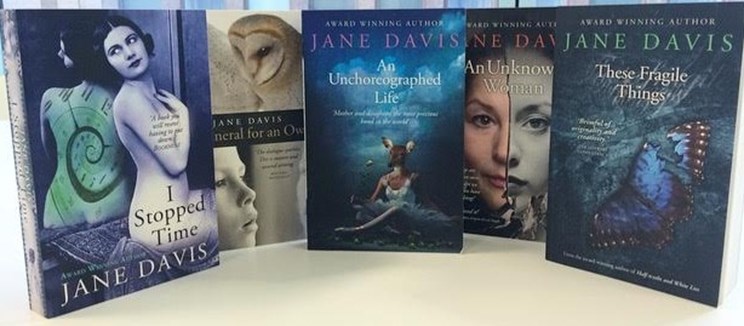
In fact, ghosts are frequent visitors in my daily life. I might park in Shere at the beginning of my favourite walks in the Surrey Hills, and see Sir James Hastings crossing the square from his home, past the war memorial, to the pub he drank in, his elderly German Shepherd called Isambard in tow. (I Stopped Time). I take a short cut through Honeywood Walk in Carshalton and see the tree that caused the collapse of the wall that Judy Jones was buried under (These Fragile Things). I cross the small wooden bridge at the foot of the waterfall in Grove Park and Aimee swirls round, elbows on the rail. (A Funeral for an Owl). I come across a lone stag when out walking in Richmond Park, and somehow it is the stag that blocked Alison’s path, looking her straight in the eye (An Unchoreographed Life).

We live with our characters so long, they’re kin to us. In a way, we know them better than friends and family, because we’ve seen through their eyes and know their every thought. Every single one of these things was a memory of my own, a memory that I’ve since given to a character, and in editing my novels – that constant re-reading – I’ve made the memories more theirs than mine. You might even say that I’m the intruder. Perhaps, inadvertently, I’ve become the ghost.  


Publication Details, Smash all the Windows:
 
It has taken conviction to right the wrongs.
It will take courage to learn how to live again.

For the families of the victims of the St Botolph and Old Billingsgate disaster, the undoing of a miscarriage of justice should be a cause for rejoicing. For more than thirteen years, the search for truth has eaten up everything. Marriages, families, health, careers and finances.

Finally, the coroner has ruled that the crowd did not contribute to their own deaths. Finally, now that lies have been unravelled and hypocrisies exposed, they can all get back to their lives.

If only it were that simple.

Smash all the Windows will be released on 12 April, but you can pre-order it now for the special price of 99p/99c (Price increases to £1.99 on 12 March. Price on publication will be £3.99).

Smash all the Windows is available at all of these retailers.
 
From 13 February to 10 March, US readers can also enter a Goodreads Giveaway for a chance to win one of 100 eBooks.

About Jane Davis

Hailed by The Bookseller as ‘One to Watch’, Jane Davis is the author of eight novels.
Jane spent her twenties and the first part of her thirties chasing promotions at work, but when she achieved what she’d set out to do, she discovered that it wasn’t what she wanted after all. It was then that she turned to writing.

Her debut, Half-truths & White Lies, won the Daily Mail First Novel Award 2008. Of her subsequent three novels, Compulsion Reads wrote, ‘Davis is a phenomenal writer, whose ability to create well-rounded characters that are easy to relate to feels effortless’. Her 2015 novel, An Unknown Woman, was Writing Magazine’s Self-published Book of the Year 2016 and has been shortlisted for two further awards.

Jane lives in Carshalton, Surrey with her Formula 1 obsessed, star-gazing, beer-brewing partner, surrounded by growing piles of paperbacks, CDs and general chaos. When she isn’t writing, you may spot her disappearing up a mountain with a camera in hand. Her favourite description of fiction is ‘made-up truth’.


CONTACT DETAILS

Press enquiries: janerossdale@btinternet.com
High resolution photos available from https://jane-davis.co.uk/media-kit/


Friday, 9 December 2016

Revisiting the Triskele Lit Fest 5/5: Preserving the Unicorn

The last session of September's Triskele Lit Fest was the intriguingly-titled "Preserving the Unicorn," a conversation with literary authors and their editors, chaired by Catriona Troth.

Participants Sunny Singh, Alex Pheby and his editor Sam Jordison, and Rohan Quine and his editor Dan Holloway talked about their influences and inspirations, and the process of editing a literary novel.

A discussion that roams from Dante's Inferno to Freudian psychoanalysis, Martin Scorsese to Gustav Klimpt, A Clockwork Orange to Dick van Dyke (in the space of one sentence!), and Derrida to Salman Rushdie.

Watch the full panel here:


Part way through, Alex Pheby throws out a challenge to the audience. "No one ever comes back to me on this," he says. "I dunno," says the chair, "I know some of this lot." On the day, we ran out of time to follow through on this, but audience member, Orna Ross (who had been on the Hist Fic panel earlier in the day) did come back with the series of questions for Alex. We are hoping to persuade him to respond to those questions in Words with Jam in the New Year.

You can watch all the videos from TLF16 on our YouTube Channel.

Rohan Quine is a writer of literary fiction with a touch of magical realism and a dusting of horror, celebrating the beauty, darkness and mirth of this predicament called life, where we seem to have been dropped without sufficient consultation ahead of time.

Publications: The Imagination Thief (novel); The Platinum Raven, The Host in the Attic, Apricot Eyes, and Hallucination in Hong Kong (four novellas); and the upcoming Beasts of Electra Drive, now barrelling down the pipeline.


Rohan's editor, Dan Holloway is a poet, novelist, journalist, editor and performer. Dan loves the writing and research process but comes into his own when given a microphone. He is the rabble rouser in chief of The New Libertines, who have been touring the UK’s festivals and fringes since 2011. In 2010, he won the international spoken prose show Literary Death Match and competed at the 2016 UK National Poetry Slam Final at the Royal Albert Hall.

He also runs the editing and copywriting business Rogue Interrobang, working with academics and non-fiction writers.


Sunny Singh is an author and journalist. She also teaches creative writing at London Metropolitan University.

One unusual aspect to the development of her novel, Hotel Arcadia, was the role of Sunny’s Dutch translator in the editing process.

Sunny was born in India, and has lived in Pakistan, Spain, South Africa, Latin America and the US.


Alex Pheby was born in Essex, but moved to Worcester in his early childhood. He currently lives with his wife and two children in London, where he teaches at the University of Greenwich. Playthings was described as "simply a superb novel" in the Literary Review, "compelling" in the Guardian, glowingly reviewed throughout the UK press, and shortlisted for the 2016 Wellcome Prize.


Alex's Editor, Sam Jordison is a journalist, publisher and writer. He is the co-director of award-winning Galley Beggar Press. He writes for The Guardian and TLS. He is the author of several works of non-fiction, his latest is called Literary London and is co-written with Eloise Millar.


The panel was chaired by Catriona Troth, who is a member of the Triskele Books author collective and the author of two novels, Ghost Town and Gift of the Raven. She writes regularly for Words with Jam magazine, where she has particularly enjoyed interviewing authors like Sunny Singh, Leye Adenle,  Michelle Innis and Myles E Johnson.

Tuesday, 5 May 2015

Literary Fiction – Isn’t it all just clever marketing?


By Jane Davis


Jane Davis
Asked whether she wanted to market her fiction as literary or commercial, Adele Parks enquired, ‘What’s the difference?’ The reply came: ‘Literary fiction sells an average of 7,000 copies. Commercial fiction sells an average of 70,000 copies.’ There was her answer. She wanted to eat.

It’s just as well that the advice received on this occasion was practical. I have always thought that careers’ advisors neglect the question, ‘How much do you want to earn?’ The agent in question might well have waxed lyrical about great literary traditions. Because once an author has made his or her choice, the chances are that they will be pigeon-holed.

Parks was only offered this choice because elements of her writing might be considered to be literary. While we all know what it is not, debate continues about what literary fiction actually is.

"Literary Fiction is experienced as an emotional journey through the symphony of words, leading to a stronger grasp of the universe and of ourselves." (Huffington Post)

‘Literary fiction’ is a label I continue to feel uncomfortable with. As someone with few formal qualifications, it seems arrogant to claim a title shared by the likes of Dickens, Austen and Booker prize-winners. I am also aware that it can be off-putting for some readers, who associate it with something difficult or inaccessible, something that will have them constantly reaching for the dictionary. As John Gardner wrote in The Art of Fiction: “I don't want to be lectured, have issues thrust down my throat or, dare I say it, be called upon to admire the beauty of the language.” While Eimear McBride used her competition wins as a platform to urge publishers to back fiction that is challenging, a large section of readers just want to be entertained.

This week, The Telegraph published an article under the heading, ‘Why Great Novels Don’t Get Noticed.’ In this case, the great novel had been written by Samantha Harvey, whose debut had been longlisted for the Man Booker Prize, shortlisted for both the Orange Prize for Fiction and the Guardian First Book Award, and had won the Betty Trask Award. Her third novel, ‘Dear Thief’ had a cover quote from Michael Cunningham, author of The Hours, and scores of glowing reviews following its September release, yet, even with these advantages, it has only sold 1,000 copies. Harvey’s editor Dan Franklin explained that, ‘She writes serious books, which is not to the modern taste.’

When we hear Will Self mourn the death of the literary novel, we tend to think of this dilemma as being new. A recent re-reading of Diana Athill’s wonderful memoir ‘Stet’, about her career working as an editor at Andre Deutsch Ltd, served as a reminder that it is anything but. Athill goes on to describe how, when the typescript of a literary book arrived on her desk, she would hope it was bad, because then the decision was easy. But if it was good, the dreaded editorial conference would follow at which the team would estimate how many copies they thought they might shift, and the answer would generally be, ‘About eight hundred’. The decision was then to turn something wonderful in the knowledge that it wouldn’t wash its face, or to accept that they would make a loss.

So, what’s the answer? Kate Mosse, author, founder and defender of the Orange Prize for fiction has found one. She has begun to distance herself from the literary tag, claiming that her skill is story-telling, not literary fiction. The inference is that genre labels are all just clever marketing.


Jane Davis’s debut, Half-truths and White Lies, won the Daily Mail First Novel Award and was described by Joanne Harris as ‘A story of secrets, lies, grief and, ultimately, redemption, charmingly handled by this very promising new writer.’ She was hailed by The Bookseller as ‘One to Watch.’ Five self-published novels have followed: I Stopped Time, These Fragile Things, A Funeral for an Owl, An Unchoreographed Life and now her latest, released March 2015, An Unknown Woman. Jane’s favourite description of fiction is that it is ‘made-up truth.’ http://jane-davis.co.uk/


Friday, 5 April 2013

Researching for Historical Fiction

When I began writing I followed the mantra spouted by so many wise owls who guided the tyro author, “write what you know”. It was a rule that urged aspiring authors to write about their own experiences and world. Such authenticity would inevitable result in better and more distinctive writing. I believed it.
I began writing modern day stories of kitchen sinks, crime and humour but never seemed to find that extra fizz that elevated the writing or the story, or indeed this author. Somehow the available palette seemed limited and the settings too parochial.

I felt such a fool when it suddenly and belatedly hit me that Hilary Mantel did not actually live in Tudor times, Bernard Cornwell never served with Wellington’s army against Napoleon and George Macdonald Fraser was never a Victorian cad. These wonderful historical fiction authors were not writing of what they know, rather they knew of what they wrote. Research was their secret for opening up the whole of human history for their storytelling. It brought authenticity and insight, it released the imagination and brings confidence to the writing and storytelling.

I decided to ignore the wise owls and began to explore historical fiction as a way to tell compelling and human stories. I had a story in mind, the characters beginning to take shape, all I needed was the right setting and time to place it. So I researched. And I found Aden in 1965 and the seeds of my novel The Open Arms of the Sea began to grow and flourish. Four years later it emerged as a real live book.

I am a novice historical fiction author but I share some of the observations and insights into research that I have picked up along the way. I will say from the outset that I am far too young to have served in Aden in 1965, I have no military background or connections and have never visited Yemen. The resulting novel is all research and imagination.

It’s the story, stupid

No matter how much research you do, how thorough, how insightful, it matters not a jot if you don’t have a good, well told and compelling story, characters who are human, engaging and believable and that they all exist in an enthralling place and time that smells, sounds and feels as well as looks. You are not writing historical fiction but a fiction historical. The story always comes first.

Wear your research lightly.
Exposition and research chunking is a death knell to good storytelling and the urge to cram in too much of your recently acquired historical knowledge and insight is to be resisted at all costs. If it doesn’t flow naturally in the narrative and writing style then it doesn’t go in. A good 95% of what you discover and learn through your research should never find its way to the pages of your novel, only the 5% that oils its narrative wheels.

Good research improves your writing.

I promise you it will. Good and thorough research establishes a solid and strong knowledge framework which gives the author one of the most precious and influential gifts for good writing – confidence.

Research can be a turn-off for writing.

I think you have to have a genuine interest or enthusiasm for the time and place your novel is set. Writing a novel can take a long time and you have to be prepared to maintain your writing verve throughout. Research can reveal that your chosen period is not as interesting as it once seemed, or that it is a saturated period market for novels or your story can find no foothold in its time. If you don’t maintain your interest in the history then the energy and buzz of your writing will soon pale. Research is about proving you have chosen the right history as much as supporting its fictionalised story.

So what research did I do for The Open Arms of the Sea?

A lifetime love of watching war films certainly helped. It has certainly been the constant backcloth of knowledge against which everything else has been added. A literature degree at university gave the fiction cells a stir that churn still and an interest in modern history was always there too. Practically, of course, there were the usual research routes. Wikipedia and Google for basics but always treated warily, library, newspapers/journals of the time and novels set in the chosen period are all standard research fare. My genre and chosen period of 1965 in Aden offered up a few more research avenues such as Regimental reports, soldiers' diaries and memoirs. One area that provided really great help was photographs of the period and place – no better way to get an instant feel for a wide range of cultural minutiae – dress, vehicles, foods, street scenes etc.

What should I have researched that I didn’t?

My own friend and colleague network. It was a great Doh! moment when following the publication of The Open Arms of the Sea I discovered that two people in the same village as me actually served in Aden, albeit in the late sixties and a work colleague also served on the Aden Defence Ministry desk during the crisis. The lesson learned is to check out one’s networks for any possible insights. Because I was writing alone I kept my project secret. More fool me. I have also learned that my network contacts also include a university lecturer specialising in the Stuarts, another who has written learned texts on Medieval Britain and an ex-headmistress who was taken from Alderney by the Germans as a teenager and imprisoned in Germany for the duration. History is everywhere if you look for it. Even old history.

And next?

I’m working on a story set in the SOE and France during the Second World War. Interesting times and people. Deceit, deception, courage, action and some romance thrown in. A secret world. Research, as always, a challenge.


By Jasper Dorgan